


Satureja montana Seeds | Winter Savory
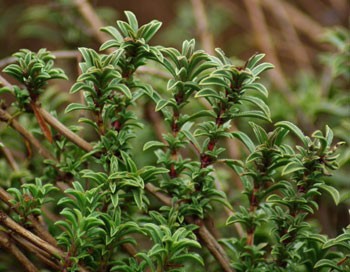
LATIN NAME: Satureja montana
COMMON NAME: Winter Savory
Plant Profile
Winter savory is the perennial half of the savory pair: a low, woody-based subshrub that keeps its narrow leaves through the cold months in mild climates. It forms a neat mound of branching stems that turn woody at the base with age, making it a candidate for the front of a border or the edge of a path where it can be brushed for scent. In hard winters the top may die back, but the crown usually returns once the soil warms.
The leaves are small, narrow and leathery, a glossy dark green with a rolled margin that helps the plant hold water through dry summers. The stems are square in section, as is typical of the mint family, and they carry the foliage in opposite pairs. White to pale lilac two-lipped flowers open in late summer in small whorls, quieter than the annual’s show but just as attractive to bees.
The evergreen habit is the whole point of the name. A cook with a winter savory plant can snip aromatic sprigs in the cold months when the annual savory is long gone, which is why the perennial earned its place in the cottage and kitchen garden alike. It also tolerates poorer, sharper-draining ground than the annual accepts.
Because winter savory is selected for a particular thymol-carvacrol balance, seedlings vary and do not always hold the parent’s oil. Tissue-culture lines and shoot-tip propagation are used to multiply elite, true-to-type material and to clean stock of the viruses that accumulate in old garden clumps. For the home grower the practical version of this is simple: keep the cultivar true by cuttings rather than by seed, rooting soft tip growth in summer.
Science & Biotechnology
Where summer savory runs on carvacrol and p-cymene, winter savory brings thymol to the table as well, and that single extra compound changes everything about how the two taste and smell. Thymol is the warm, almost medicinal note you recognise from thyme, and in winter savory it sits beside carvacrol to give a pungent, resinous character that survives drying and long cooking. The plant’s essential oil is studied for exactly this thymol-carvacrol pairing, which is also what gives it a place in preservative and antimicrobial work.
Uses & Benefits
In the kitchen winter savory is the stronger, more resinous of the two savories, which is exactly why it suits slow-cooked dishes that would flatten a gentler herb. It is classically tucked into bean pots, game stews and robust stuffings, and a sprig dropped into a pot of lentils or dried beans through the long simmer lends a depth that summer savory cannot quite reach. The leaves are tougher than the annual’s, so they are usually stripped from the stem and chopped, or added whole and lifted out before serving. Dried winter savory keeps its pungency remarkably well, which is why it was the savory of the winter larder before fresh herbs were a year-round option.
The practical value of the evergreen habit shows up on the plate: when the summer savory has been killed by frost, the winter plant still supplies a peppery, thyme-like pinch from the garden edge. Cooks who keep both species get a continuous savory flavour across the calendar, with the annual for delicate summer salads and the perennial for the heavy cold-weather pot.
Winter savory earns its keep as an ornamental as well as a culinary herb. Its compact mound suits a rock garden or a dry wall, and the late-summer flowers feed bees when little else is open. Plant it along a path where footsteps release the scent, or use it to edge a vegetable bed.
Cut the plant back lightly after flowering to stop it becoming leggy and to encourage soft young growth, which is the most flavourful part. Avoid cutting into old bare wood, which may not regrow; instead shear the green tips and let the crown refill.
In cold zones grow winter savory in a pot that can be moved under cover, or mulch the crown and accept some die-back. Sharp drainage through the wet months matters more than warmth, since a wet root run is what kills it rather than the cold itself.
Growing from Seed
The seed can be sown where it is to grow once warmth returns, but it is slow and uneven, so many growers prefer to start it under cover or simply strike cuttings. Surface sow the fine seed and keep it warm and bright; do not bury it. Cuttings of non-flowering tip growth root readily in a gritty mix and give a plant identical to the parent in the same season.
Our Take
Pair the perennial with its annual cousin summer savory for a season-long supply, and explore the thymol theme further through English thyme and French thyme. For a woody Mediterranean neighbour with similar needs, rosemary is a natural fit.
Related Reading
Readers interested in Winter Savory frequently explore these as well: