


Salvia rosmarinus Seeds | Rosemary Officinalis
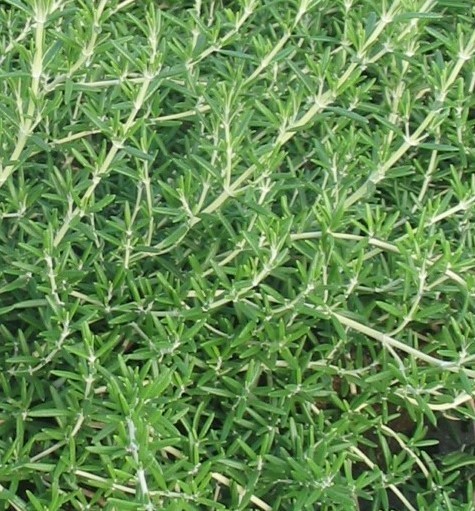
LATIN NAME: Salvia rosmarinus
COMMON NAME: Rosemary
Plant Profile
Salvia rosmarinus is an evergreen shrub with slender, leathery, needle-like leaves, white-felted beneath, and two-lipped blue-violet flowers borne in short racemes along the stems. The leaves are borne in opposite pairs, and the corolla is bilaterally symmetric, adapted to bee pollination. As a Mediterranean native it is built for bright, dry, alkaline ground and accepts drought once its roots are set.
Wild rosemary varies chemically across its range, and three broad chemotypes are recognised: a 1,8-cineole type, a camphor type, and a verbenone type, each with a different balance of the main volatiles. This variation explains why one plant smells piney and another almost camphor-like. The shrub is distinct from lavender and sage, its neighbours in the same family, by its rigid, resinous foliage and its wiry habit.
Science & Biotechnology
Rosemary’s Latin name was long Rosmarinus officinalis, from “ros maris,” the dew of the sea, a nod to the misty blue flowers on coastal cliffs. Modern taxonomy has moved it into the genus Salvia, so the correct scientific name is now Salvia rosmarinus, though the older binomen still appears on seed packets and in most literature. Either way, the plant’s chemistry is what matters to cook and distiller alike.
The essential oil is led by 1,8-cineole (eucalyptol), with camphor, alpha-pinene, borneol, and bornyl acetate filling the profile. The non-volatile leaf carries rosmarinic acid as the major phenolic, plus the diterpenes carnosic acid and carnosol, which are among the strongest natural antioxidants in culinary herbs. Steam distillation of the flowering shoots yields the familiar oil, while solvent extracts capture the polar phenolics for food preservation.
Beyond the volatile oil, rosemary yields a non-volatile antioxidant extract rich in carnosic acid and carnosol that is approved in the European Union as a food additive, listed as E392, used to stop fats and oils from going rancid without synthetic chemicals. This is the commercial face of rosemary’s ancient preserving role, and it is why “extract of rosemary” appears on the labels of many savoury snacks and cured products.
Micropropagation of rosemary from shoot tips is routine, and hairy-root systems have been used to produce rosmarinic and carnosic acids outside the field. Studies document antimicrobial, anti-inflammatory, and cognition-related activity, the last keeping rosemary linked in folklore to memory and remembrance.
Uses & Benefits
In the kitchen the needles flavour roasted meats, breads, and potatoes, pairing with lamb, garlic, and olive oil. The distilled oil goes into shampoos and scalp treatments, where it is valued for a stimulating scent, and into soaps and herb cushions. Traditionally the plant symbolised remembrance and scented bathwater, and in the garden it is a steady bee plant through the flowering season.
A few needles steeped in olive oil make a simple flavoured oil, and rosemary honey from hives near the shrubs carries a faint resinous note. In the home the sprigs are slipped under roasting fish or pushed into bread dough before baking, where the heat releases the cineole and camphor that define the scent. Because the flavour is strong, a small amount seasons a whole dish.
Growing from Seed
Rosemary demands sharply drained, slightly alkaline, sandy or gravelly soil and full sun, and it is drought-tolerant once established. It is most reliably started from cuttings rather than seed, and young plants should be spaced 40 to 60 cm apart once they show several true leaves. A warm, airy site prevents the damp that damages it.
Take softwood cuttings in spring from non-flowering shoots, strip the lower leaves, and root them in a gritty mix kept just moist; the shrub roots readily and a single plant can supply many replacements. Seed is possible but slow and variable, so named forms kept for oil are always propagated from cuttings to stay true to the parent’s chemistry.
Water sparingly and let the top layer dry between soakings, since wet roots are the quickest way to lose a plant. After flowering, shape the bush but avoid cutting deep into bare old wood, which may not regrow. In hard-frost districts grow it against a warm wall or in a pot brought under cover, and mulch the crown lightly. Watch for scale insects, powdery mildew, and root rot in heavy soil.
Our Take
I keep a rosemary in a pot I can wheel into shelter for the coldest weeks, and it pairs perfectly with English sage and English lavender. For more aromatic Mediterranean herbs add French thyme and clary sage.
Related Reading
More species in the same orbit as Rosemary: