


Erigeron speciosus Seeds | Oregon Fleabane
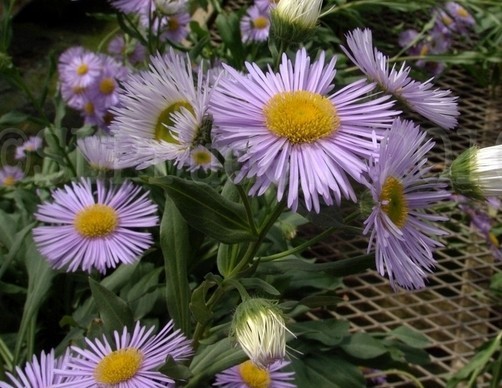
LATIN NAME: Erigeron speciosus
COMMON NAME: Oregon Fleabane
Plant Profile
The species is built like a tidy meadow perennial. Narrow, lance-shaped leaves clasp a clump of upright stems, and the flower heads are ray-rich, often bearing far more slender petals than a typical aster. The overall impression is finer and lighter than a Michaelmas daisy, which is why it slots into the front and middle of a border without bullying its neighbours. The stems are slim but stand without staking in open ground.
The Latin epithet speciosus means beautiful or showy, and the plant lives up to it. Unlike the weedy annual fleabanes that colonise pavements, Erigeron speciosus was singled out by gardeners precisely for its ornament, and selections such as the blue ‘Azure Fairy’ and the violet ‘Double Beauty’ push the colour further. It is a species where the wild type was already garden-worthy, so breeding mostly refined the tone.
Its western-American pedigree makes it a natural fit for prairie and meadow plantings, gravel gardens and the informal mixed border.
Seed-grown plants vary in tone, which is part of the charm, but if you want a specific cultivar’s exact blue or violet, lift a cluster in spring and take basal cuttings, or divide the clump. Cuttings hold the parent colour true, while seed gives you the pleasant lottery of the species mix. Either route keeps the plant coming back as a dependable clump.
The many small daisies are individually short-lived in the vase, but because a stem carries so many buds the overall spray keeps opening for a good while after cutting, and the airy habit makes fleabane a useful filler that softens tighter blooms in a mixed bunch. Cut the stems in the cool of the morning and the haze of blue and white lasts several days. Dried, the papery heads keep a faint colour and a wispy form that suits winter arrangements better than heavier daisies.
Science & Biotechnology
Fleabane sounds like a weed you would pull, yet Erigeron speciosus is the plant that shames more famous daisies for length of show. Each stem carries not a handful of petals but a loose, airy spray of many-petalled, daisy-like flowers in soft blue, violet and white with a yellow centre, and those stems keep opening new sprays from early summer deep into autumn. A single clump can throw dozens of flowering stalks, so the border reads as a haze of colour rather than a few isolated blooms. This is a perennial that earns its space by simply refusing to stop.
Like many Asteraceae, Erigeron carries sesquiterpene lactones in its foliage and flower heads. These bitter, often skin-irritating compounds are the family’s chemical armour against grazing mammals and certain insects, and they are the subject of continuing screening for antimicrobial and anti-inflammatory activity.
Uses & Benefits
The open, accessible heads are a magnet for a broad sweep of pollinators. Bees, hoverflies and butterflies work the flowers through the long season, and the sheer number of small heads means a steady nectar and pollen supply when showier plants have finished. For a wildlife border this is one of the hardest-working daisies you can grow.
Because it blooms so long and so lightly, Oregon fleabane is a forgiving plant for the gardener moving away from rigid bedding toward a looser, meadow-style scheme. It weaves between grasses and taller daisies without smothering them, and its pale tones cool down hot-coloured companions. In a mixed border it fills the awkward early-to-mid-summer gap, when spring bulbs have finished but the high-summer perennials have not yet peaked, which is exactly when many borders look bare.
Growing from Seed
It is unfussy about soil as long as the ground is not waterlogged, and it rewards a sunny, open site with the longest possible show.
The seed is fine and best sown on the surface of a moist seed compost, lightly pressed and kept bright and barely damp until the seedlings appear. Prick the young plants into small pots once they can be handled, and grow them on in the open air before setting them out. Because the seed is small, a fine mist beats a heavy watering can for the first wetting.
Mature clumps can be split in spring or autumn to refresh the centre, which tends to thin with age. Replant the vigorous outer pieces in lean, free-draining soil at roughly 35 centimetres apart, and the divided plant will establish quickly and flower the same season. A light trim after the first flush encourages a second wave of stems.
Our Take
Oregon fleabane asks for almost nothing beyond sun and reasonable drainage, and it pays back months of bloom. Set it among blazing star and sunflower for a prairie feel, or near Erigeron breviscapus if you want to compare fleabane cousins.
Related Reading
More species in the same orbit as Oregon Fleabane: